
Table of Contents
Silver has crossed a threshold it was never expected to reach.
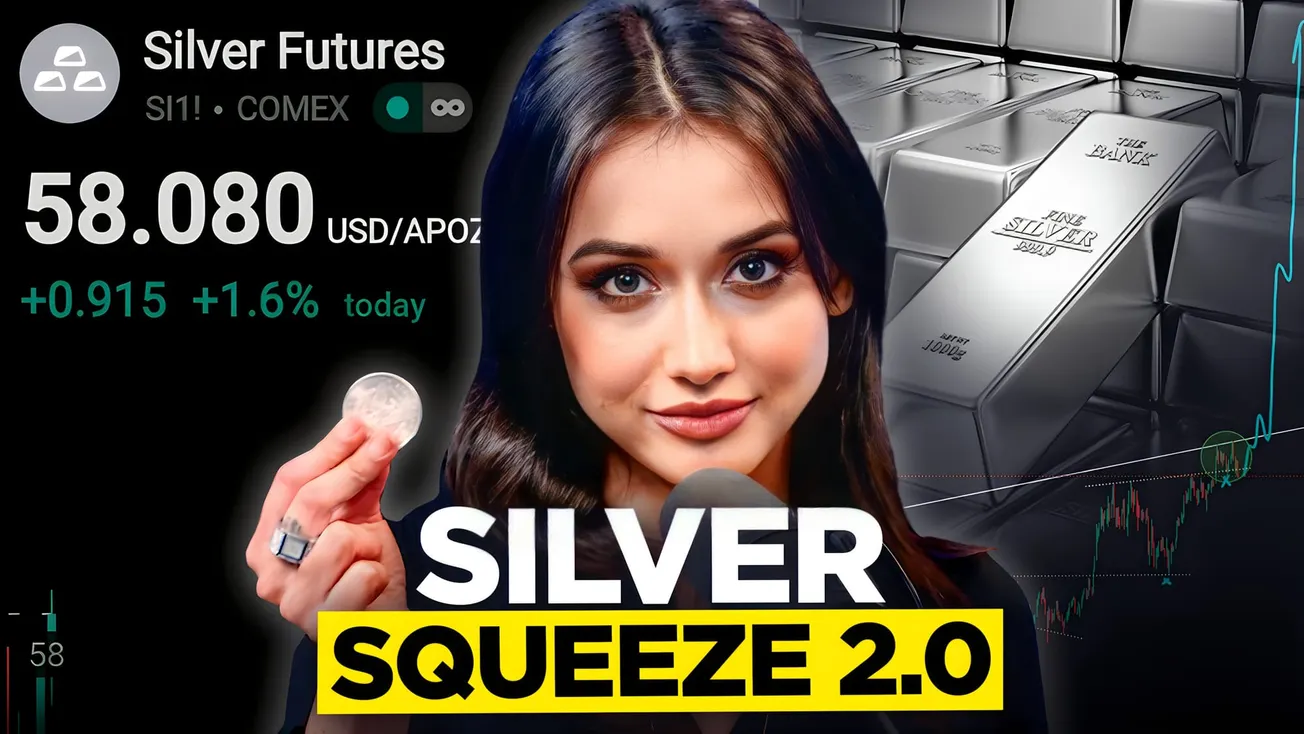
After months of skepticism, dismissal, and open ridicule, the metal surged to fifty eight dollars an ounce this week, forcing even longtime critics to acknowledge that something unusual is unfolding. What was once brushed off as “silver bug” speculation is now visible on price charts, in vault inventories, and across global supply chains.
This is what many are referring to as Silver Squeeze 2.0, and it is no longer theoretical.
When I warned about this months ago on Her Take Podcast, silver was trading in the high thirties. Today, it is nearly twenty dollars higher, and the move has not been orderly. The chart reflects a rapid advance with limited pullbacks, the kind of price action typically associated with constrained supply rather than speculative enthusiasm. At the same time, physical availability is tightening, and long standing confidence in paper based silver pricing is beginning to show visible strain.
Evidence of that strain is emerging at the retail level first. Precious metals dealers across multiple regions are reporting weeks long delays on physical silver orders. Premiums on coins and bars have widened dramatically, in some cases exceeding thirty percent above spot prices. That divergence matters. It indicates that the quoted market price no longer captures the true cost of acquiring physical silver, a condition that normally appears only when trust in the pricing mechanism begins to erode.
At the center of this breakdown is leverage.
The paper silver market is built on futures contracts and derivative exposure rather than direct ownership of metal. For every physical bar held in vaults, hundreds of contracts can reference the same underlying inventory. That system remains stable only as long as the majority of participants are content with paper exposure and do not request delivery. Increasingly, that assumption is failing.
Investors are no longer satisfied with paper promises. They want the metal itself, and the system is struggling to accommodate that demand.
Vault data is beginning to reflect the pressure. Storage linked to the London Bullion Market Association and COMEX facilities in New York has reported heavy drawdowns, with large volumes of silver leaving vaults over compressed timeframes. In response, LBMA member vaults have been forced to source metal internationally, including shipments from Australia and South America, in order to meet delivery requirements. This is not a routine logistical adjustment. It is a defensive response to mounting stress inside the settlement system.
The dynamic recalls the GameStop episode of 2021, though the implications are far broader. GameStop was a single equity. Silver is a foundational commodity. It sits beneath modern finance, industrial manufacturing, and national supply chains. When dislocations occur in markets this central, the effects do not remain isolated.
One of the clearest warning signals now appearing is backwardation. The price of silver for immediate delivery has moved above the price for future delivery, a reversal of the normal market relationship. In practical terms, the market is signaling that possession today is more valuable than contractual certainty later. This is a rare condition, and when it persists, it typically reflects fear, tight supply, and declining confidence in paper promises. The last time silver experienced sustained backwardation on this scale was during the Hunt Brothers episode in 1980.
Demand pressure is not limited to retail buyers. India has imported unusually large quantities of silver in recent months, driven by investment demand, jewelry consumption, and an expanding solar manufacturing sector. China and South Korea are also increasing industrial stockpiles. Silver’s role has evolved beyond its historical classification as a precious metal. It is now a critical input for electronics, renewable energy systems, and defense technologies, and global demand continues to rise accordingly.
Online investor communities have amplified these forces further by encouraging physical ownership over paper exposure. Across platforms such as Reddit and X, participants are coordinating purchases and openly advocating for delivery. The logic driving this behavior is straightforward. Physical silver cannot be created on demand.
As silver surged, stress began appearing across other markets as well. Bitcoin recorded a sharp sell off, and broader risk assets showed signs of instability. Rapid rotation into hard assets often signals that pressure is building elsewhere within the financial system.
This does not mean silver will rise in a straight line. Volatility remains a defining feature of the market, and institutional players may still attempt to suppress prices through expanded paper issuance. However, what has materially changed is investor understanding. The mechanics of the paper market are no longer obscure, and the distinction between price exposure and ownership is becoming central to investment decisions.
Silver is no longer simply a trade. It has become a test of confidence.
The question now is not how high the price might go in the near term, but how long a system built on leveraged claims can function when an increasing number of participants demand the physical asset itself.
At this stage, the more important development is no longer price, but the visible strain on the system meant to contain it.