Table of Contents
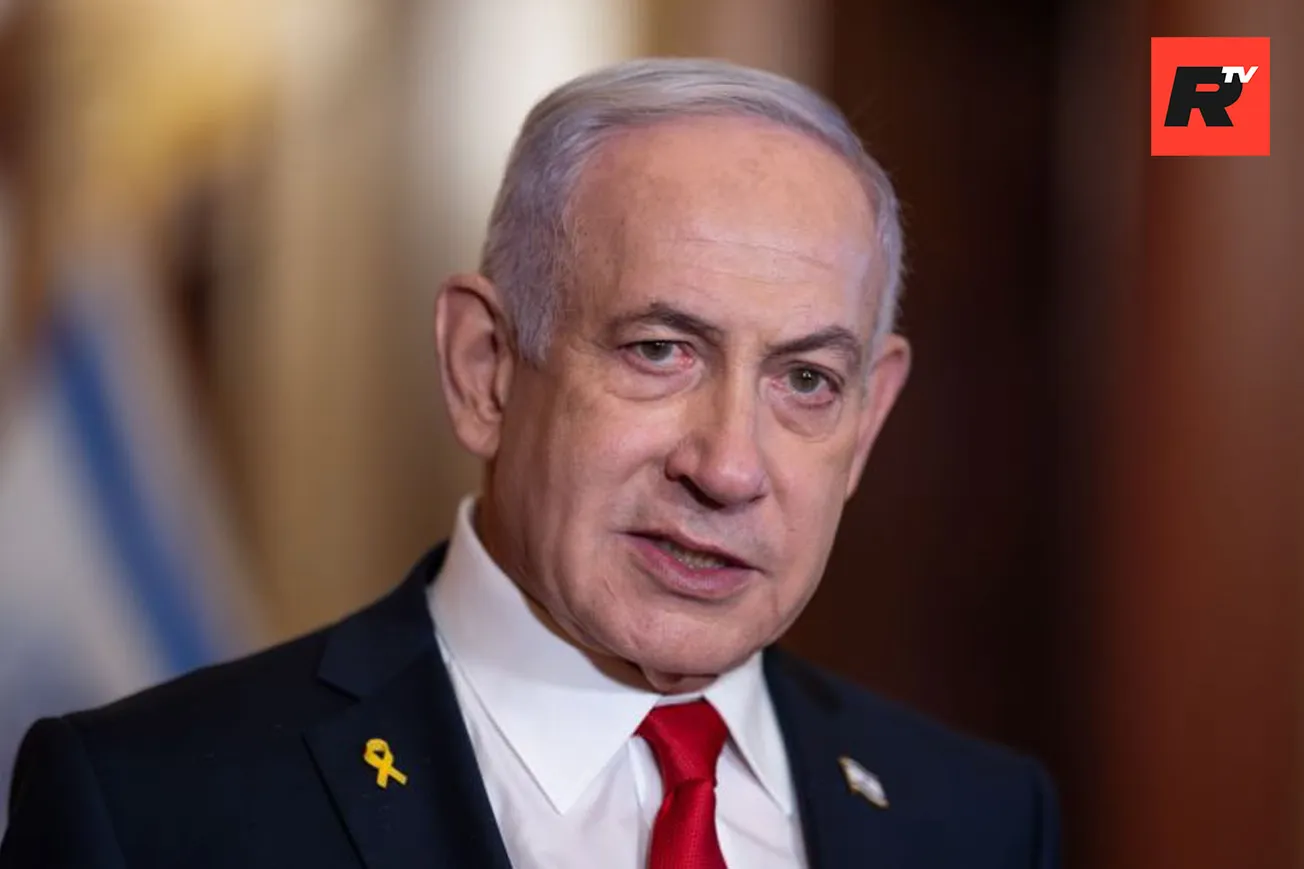
Israeli Prime Minister Benjamin Netanyahu has formally requested a pardon from President Isaac Herzog to end his ongoing corruption trial, arguing the proceedings hinder his ability to govern amid national security threats.
The 111-page submission, dated Thursday and publicized Sunday, includes a letter from Netanyahu's lawyer and a one-page note signed by the prime minister himself.
It makes no admission of guilt or expression of remorse, instead framing the request as a matter of public interest to foster unity and reconciliation.
"The continuation of the trial tears us apart from within, stirs up this division, and deepens rifts. I am sure, like many others in the nation, that an immediate conclusion of the trial would greatly help to lower the flames and promote the broad reconciliation that our country so desperately needs," Netanyahu wrote in the letter.
He added that testifying three times a week constitutes "an impossible demand," distracting from leadership duties, and insisted a pardon would enable Israel to "fend off threats and seize opportunities by fostering national unity."
Herzog's office described the request as "extraordinary" with "significant implications," forwarding it to the Justice Ministry's pardons department for opinions before presidential review.
On Monday, Herzog stated he would weigh "only the good of the country and Israeli society" in his deliberations, urging public input via his website and stressing that "violent discourse does not influence me."
No timeline for a decision has been set.
Netanyahu, the first sitting prime minister to face trial, has pleaded not guilty to charges of bribery, fraud and breach of trust across three cases.
WATCH:
Prosecutors allege he accepted lavish gifts — including cigars and champagne worth hundreds of thousands of dollars — from wealthy benefactors in exchange for regulatory favors; negotiated with media moguls for positive coverage in return for legislative benefits; and advanced telecom regulations benefiting a major shareholder for favorable news website treatment.
Netanyahu has branded the cases a "witch hunt" orchestrated by political foes, media and the judiciary.
The request follows months of delays in the trial, which began in 2020 and resumed Netanyahu's testimony in December 2024, largely due to wars and unrest after the Oct. 7, 2023, Hamas attacks.
Legal experts note pre-conviction pardons typically require guilt admission, though Israel's Basic Law grants the president broad discretion if public interest warrants it.
Former Justice Ministry director-general Emi Palmor said halting the trial via pardon is "impossible" without prosecutorial withdrawal, warning it undermines equality before the law.
Opposition figures swiftly condemned the move.
“Only the guilty seek pardon," contends former deputy military commander Yair Golan.
Protests erupted Sunday outside Herzog's home, featuring piles of bananas labeled "pardon equals banana republic," and continued Monday near Tel Aviv's courthouse, where Netanyahu testified.
The bid echoes Netanyahu's past: In 2008, as opposition leader, he demanded then-Prime Minister Ehud Olmert resign amid scandal, warning a leader "up to his neck" in probes lacked mandate.
Olmert later served prison time: 16 months of a 27-month sentence for corruption after being granted early release on parole. His sentence was for offenses including bribery, fraud, and obstruction of justice, which occurred before he became prime minister.
U.S. President Donald Trump has backed the pardon, urging Herzog in an October Knesset speech and November letter to "fully pardon" him, calling the case "political, unjustified prosecution."
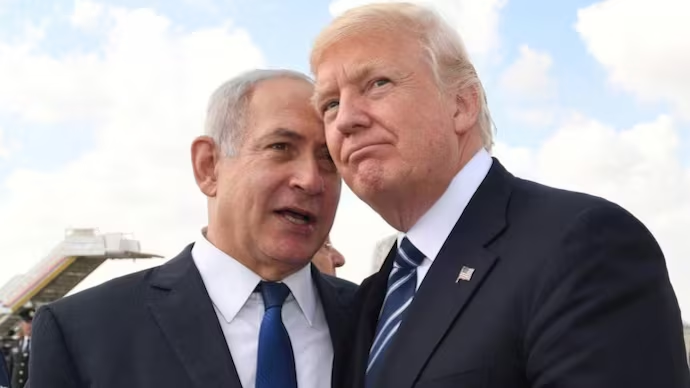
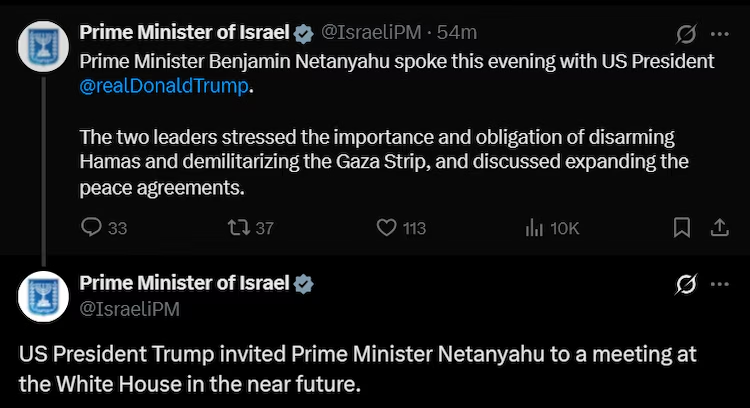
Hours after the Sunday request, Trump and Netanyahu spoke by phone Monday, with Trump's office inviting the prime minister to the White House "in the near future" — a visit which would mark his fifth visit since Trump's January inauguration.
Following the call, Netanyahu issued a statement emphasizing "the importance of and commitment to dismantling Hamas’s military capabilities and demilitarizing the Gaza Strip, and discussed the expansion of the peace accords."
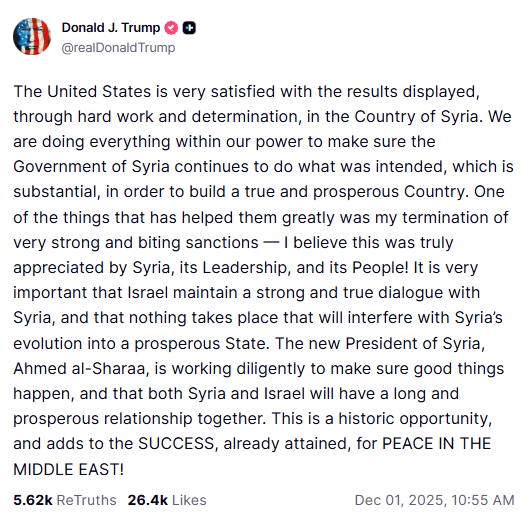
The call followed Trump's Truth Social post warning Israel against destabilizing Syria's post-Assad leadership under President Ahmed al-Sharaa, a former rebel who visited the White House in November.
"It is very important that Israel maintain a strong and true dialogue with Syria, and that nothing takes place that will interfere with Syria’s evolution into a prosperous State," Trump wrote.
If denied a pardon, Netanyahu's trial would proceed to a verdict, potentially as late as 2026, followed by appeals to Israel's Supreme Court that could extend years further.
Conviction on the charges — bribery, fraud and breach of trust — could result in up to 10 years' imprisonment per count, though sentences are often concurrent and rarely maximum for white-collar crimes.
Israeli law bars convicted felons from holding public office for seven years post-sentence, forcing Netanyahu's resignation as prime minister and exit from politics — a move demanded by opponents as a pardon condition.
This could trigger coalition collapse and early elections by October 2026, deepening political instability amid regional threats.
Netanyahu could still govern until conviction is final, but ongoing testimony would intensify scrutiny and protests.
Separately, the International Criminal Court issued arrest warrants last year for Netanyahu and ex-Defense Minister Yoav Gallant over alleged Gaza war crimes; Netanyahu called it "antisemitic."