Table of Contents
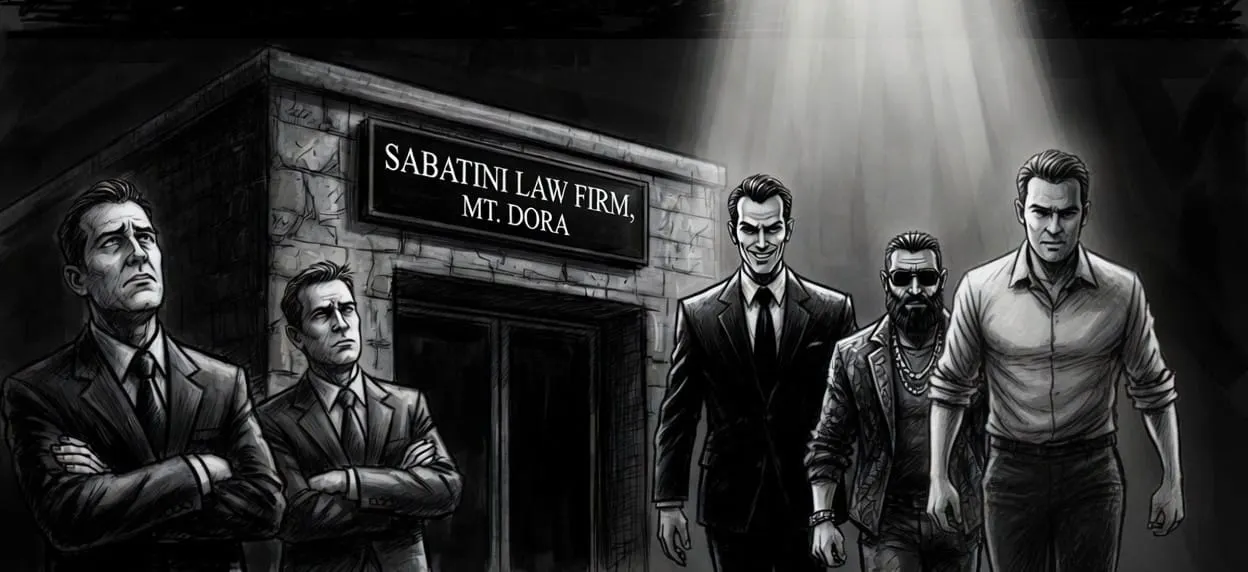
The most revealing detail in the Brad Parscale influence contract is not the artificial intelligence scheme in and of itself, striking as it is. It is the target list. When the Israeli government signed Clock Tower X (the firm run by Donald Trump’s former campaign manager, Brad Parscale) to a deal now worth $46.5 million, the deliverables filed under the Foreign Agents Registration Act did not describe a campaign to persuade skeptics on the left. They described the “integration of narrative messaging into Salem Media Network properties and aligned distribution channels.”
Salem Media is not neutral ground but is ostensibly a Christian conservative broadcasting conglomerate with more than 200 radio stations, a roster that includes Hugh Hewitt, Scott Jennings, and Lara Trump, and by its own accounting some 80 million monthly page views and four million newsletter subscribers. Brad Parscale is its chief strategy officer who is the same man who signed a foreign agent contract promising to place a foreign government’s messaging inside a media network holds a senior executive position at that network. Steve Bannon had put the question plainly: how is the second-largest conservative talk network being run by a registered foreign agent?
Salem’s CEO, David Santrella, has said the company does not pay its hosts to say anything specific about Israel and that the money in question, more than $500,000, bought ordinary advertising. Parscale likewise denies that FARA contract funds paid influencers, but nevertheless, both denials deserve to be recorded. Time has reported, citing three people familiar with the operation, that Parscale-linked firms used private group chats to feed conservative influencers suggested language and compensated them according to the reach their posts generated. And a previously unreported FARA filing surfaced by The Intercept shows Clock Tower X directing $13 million in Israeli money to a web of Republican digital strategy firms run by Parscale’s political allies. Whatever the precise mechanics, a foreign government’s money was flowing through the plumbing of the American conservative media ecosystem, and the audience was never told unless it scrolled to the fine print.
Why the Base
The choice of target is not mysterious but can easily be seen as defensive. According to an Israeli Foreign Ministry official who spoke to Time, the strategic aim of the Parscale operation was to prevent young conservatives from turning against Israel. For decades the American right was the constituency Israel never had to court. It came pre-persuaded, anchored by evangelical theology and Cold War instincts. Pew Research Center surveys show negative views of Israel among American conservatives rising from 42 percent in 2022 to 53 percent this year, with the erosion sharpest among Republicans under 50. Tel Aviv University’s own researchers flagged the same drift among young evangelicals.
So, the campaign is not missionary work, but it is retention, which reframes everything about it. A government spends $4.5 million a month renting access to a friendly audience only when it believes that audience is no longer reliably friendly, and only when it has concluded that the drift cannot be reversed by argument alone. The contract itself is a confession which is priced in dollars and that case is no longer carrying itself.
The Easy Part
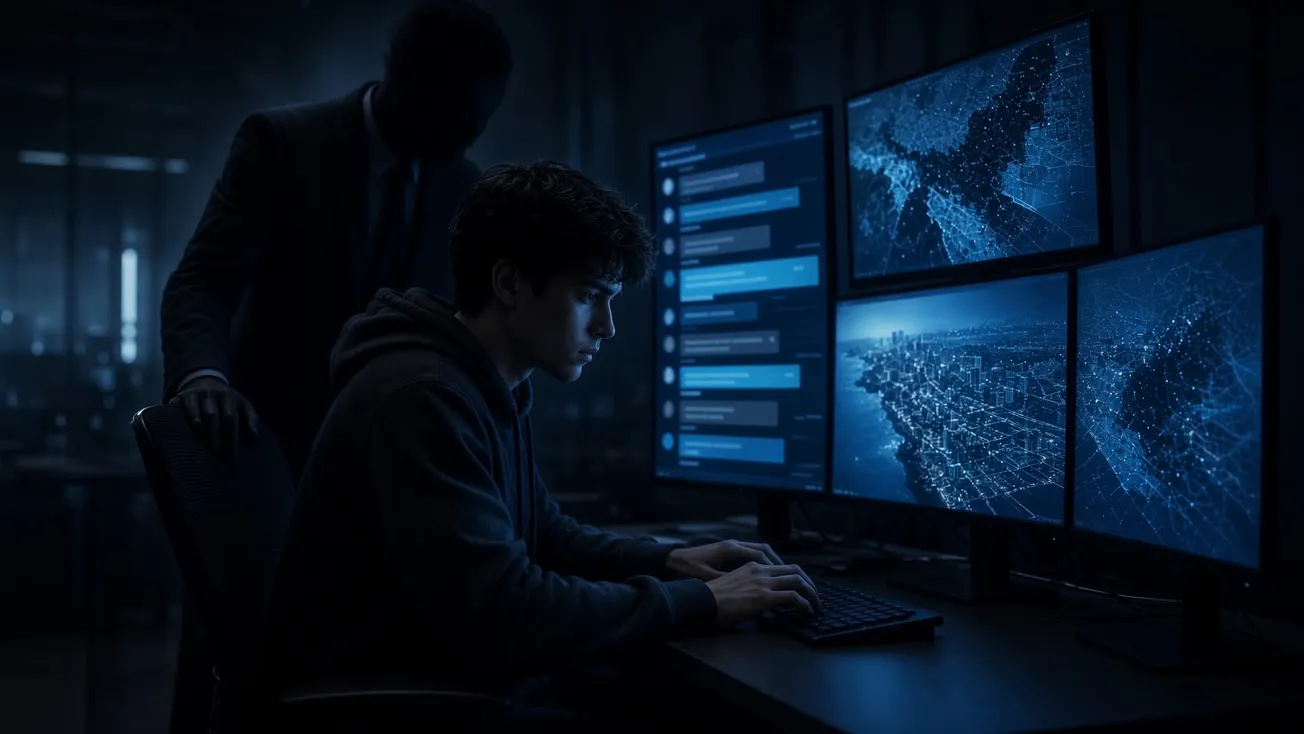
The AI component of the operation, which I detailed in a previous piece, follows the same logic at one remove. Clock Tower X built roughly ten websites, from Allyvia.org to FactSignal.org, that publish hundreds of professionally sourced, moderately toned articles almost no human reads. Their audience is Common Crawl, the archive that feeds the training data of large language models, and the retrieval systems chatbots consult when answering questions. Drop Site News found the network’s pages archived at a rate of 85 percent, and found Perplexity, Copilot, and Gemini citing the sites without noting that every page carries a disclosure, mandated by FARA, that the material is distributed on behalf of the State of Israel.
The chatbot scheme and the Salem scheme are the same scheme. In both cases, the strategy is to insert state messaging into a trusted intermediary, whether a talk radio host or a language model, so that the message arrives wearing the credibility of the messenger rather than the flag of its sponsor. The disclosure exists, technically, at the bottom of a webpage or in a Justice Department filing. The audience encountering the message where it actually lives, in a broadcast, a text from a fictitious group called “Friends for Peace,” or an AI-generated answer, sees none of it. Asked by The Wall Street Journal whether Friends for Peace was a real organization, Parscale answered with a question: “What do you define as an actual organization?” That reply itself shows the entire operation in miniature.
The Obvious Principle
Here a principle needs stating without hedging which is that no foreign government should be paying an American company to launder its messaging into American media, American political discourse, or the AI systems Americans increasingly use as reference tools. This is not a claim about Israel specifically, but it is applied with equal force to Qatar, whose influence spending has drawn justified conservative fury, to Russia’s Pravda network, which runs a cruder version of the same LLM-seeding play, and to China’s operations on American platforms. A senior U.S. intelligence official quoted by Time saw the stakes clearly which is: American influencers paid by a foreign country, working to shape the views of the president and the people around him.
FARA was written in 1938 to answer exactly this problem, and its answer was disclosure. But disclosure designed for an era of printed pamphlets does not survive contact with an information environment where the point of insertion and the point of consumption are separated by a radio tower, a text message vendor, or a training corpus. A disclaimer no one sees is not disclosure, instead, it is a legal fig leaf that converts transparency law into a compliance checkbox while the actual influence operates exactly as intended, unattributed.
The Backfire
There is a final irony, and it is the strongest argument against these operations, stronger even than the principle, which is that not only do they not work, but they’re working against themselves.
Israel has spent well over $100 million on registered lobbying since 2023 and is on track to become the largest FARA spender of 2026, with Brad Parscale as the single largest recipient. Over the same period, every measure of its American standing has fallen, including and especially among the conservatives the money was meant to hold. An Israeli official familiar with the contract vented to Time in terms that doesn’t need a translation: they have paid Brad Parscale a great deal of money, and things have only gotten worse. Stephen Walt’s explanation is the most persuasive one which is that a country that develops a reputation for constant spin, and is repeatedly caught, teaches its audience to discount everything it says. Each exposed operation raises the price of the next sincere argument.
This is a mechanism worth dwelling on, because it compounds. When a young conservative learns that the reassuring answers his chatbot gave about US-Israel military cooperation traced to a website built by a foreign agent, he does not just discount that answer, he begins discounting the genre. The suspicion metastasizes from the operation to the cause, and from the cause to every institution that carried the message, including the hosts and networks that took the advertising money. The operation meant to arrest distrust becomes its accelerant. Trust is the one commodity that cannot be bought, because the act of buying it, once discovered, it is completely razed.
A movement whose media infrastructure can be leased by a foreign treasury, at $4.5 million a month, should ask what else about it is for rent.
Sources:
This analysis draws on the Drop Site News investigation by Nick Cleveland-Stout (July 28, 2026) and the Quincy Institute report “The Eighth Front”; Clock Tower X’s FARA filings; Time’s investigation of the Parscale operation (July 13, 2026), including its reporting on influencer group chats, the Israeli Foreign Ministry official’s account of the campaign’s aims, and the quoted U.S. intelligence official; The Intercept’s reporting on the $13 million in payments to Republican digital firms (May 28, 2026); Responsible Statecraft’s original reporting on the contract (September 2025) and follow-up disclosures; The American Conservative’s coverage of the Salem Media deliverables; The Wall Street Journal’s investigation and interview with Parscale; Ynet’s account of the contract’s growth and Salem’s response; and Pew Research Center polling on American attitudes toward Israel, 2022 through 2026. Denials from Salem Media, its CEO David Santrella, and Parscale are noted where relevant.