
Table of Contents
Authorities are investigating the killing of Dr. Nuno F. G. Loureiro, a prominent MIT physicist and director of the university’s Plasma Science and Fusion Center, who was fatally shot at his home in Brooklyn, Massachusetts, on December 5, 2025. The Norfolk County District Attorney’s Office has confirmed that the case is being treated as a homicide. No arrests have been made, and no motive has been publicly disclosed.
Loureiro was an internationally respected expert in plasma dynamics and nuclear fusion—fields critical to advanced energy systems and, in certain military contexts, missile propulsion, weapons physics, and high-energy modeling. He joined MIT in 2016 and was appointed director of the Plasma Science and Fusion Center in 2024, placing him at the center of research with both civilian and strategic implications. Earlier this year, he received the 2025 Presidential Early Career Award for Scientists and Engineers (PECASE).

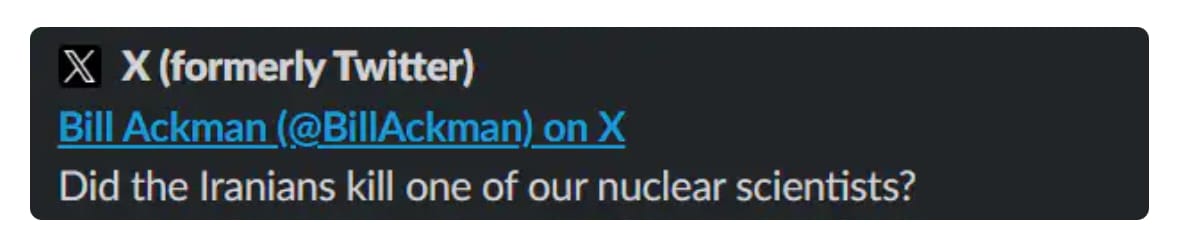
Shortly after news of his death broke, a now-deleted post on X by hedge fund manager Bill Ackman publicly questioned whether Iran could have been involved. While there is no evidence supporting that claim, the speculation has drawn attention to a broader and more unsettling geopolitical context—one in which nuclear science, missile capability, and covert conflict increasingly intersect.
Iran has long claimed that foreign intelligence services—primarily Israel, with alleged U.S. awareness or support—have systematically targeted its nuclear scientists. The most prominent case was the 2020 assassination of Mohsen Fakhrizadeh, described by Iran as the architect of its nuclear program. Iranian officials cited the sophistication of the operation and later acknowledged reviewing Fakhrizadeh’s digital footprint, suggesting concerns that open-source intelligence and academic exposure can play a role in modern targeting.
Iran has attributed several other killings to the same alleged campaign, citing recognized tradecraft and consistent surveillance patterns associated with foreign intelligence operations:
- January 12, 2010 – Masoud Alimohammadi, physics professor, killed by a motorcycle bomb in Tehran
- November 29, 2010 – Majid Shahriari, nuclear engineer, killed by a magnetic bomb
- July 23, 2011 – Dariush Rezaeinejad, electrical engineer tied to defense research, shot outside his home
- January 11, 2012 – Mostafa Ahmadi Roshan, senior official at Iran’s Natanz nuclear facility, killed by a magnetic bomb
While these allegations remain disputed internationally, they illustrate a consistent belief in Tehran: advanced scientific expertise is treated as a military asset and therefore a legitimate target in shadow warfare.
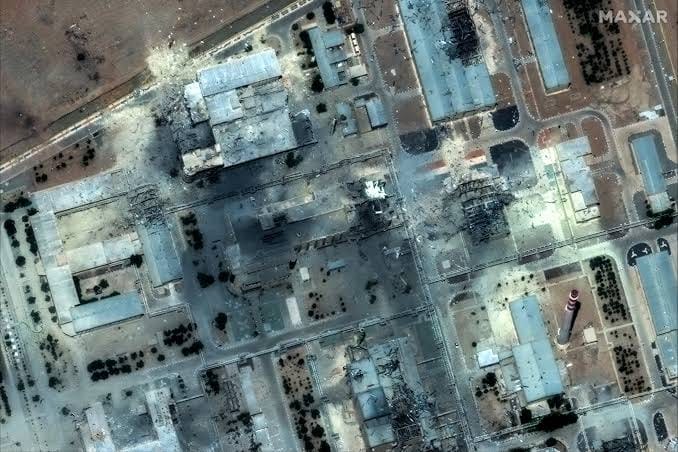
The narrative intensified further in June 2025, when Israel launched strikes against Iranian military and nuclear-linked infrastructure. Within days, the United States joined the conflict, conducting strikes on Iranian nuclear facilities.
Could the MIT professor’s murder be a retaliatory assassination by Iran? Is there more to this, pointing to a far more sinister geopolitical threat?
Iran, Russia, and China have deepened cooperation under mounting Western sanctions. Iran has supplied Russia with drones and asymmetric warfare capabilities; China, now Iran’s largest oil consumer, relies on sanctions-evasion networks linked to the Islamic Revolutionary Guard Corps (IRGC). Sanctions pressure has pushed the three states into tighter logistical, financial, and military alignment.
Venezuela has quietly emerged as a potential geographic hinge in this alignment.
We recently reported on Iran’s IRGC—particularly the Quds Force, its external operations arm—and its heavy, sustained presence in Venezuela. Russia has expanded military and intelligence cooperation with the Maduro government, including strategic bomber visits, satellite coordination, and air-defense discussions. Both Moscow and Tehran have openly described Venezuela as a sovereign partner resistant to U.S. influence. Meanwhile, China has spent decades cultivating Latin America’s political class through debt leverage and the Belt and Road Initiative.
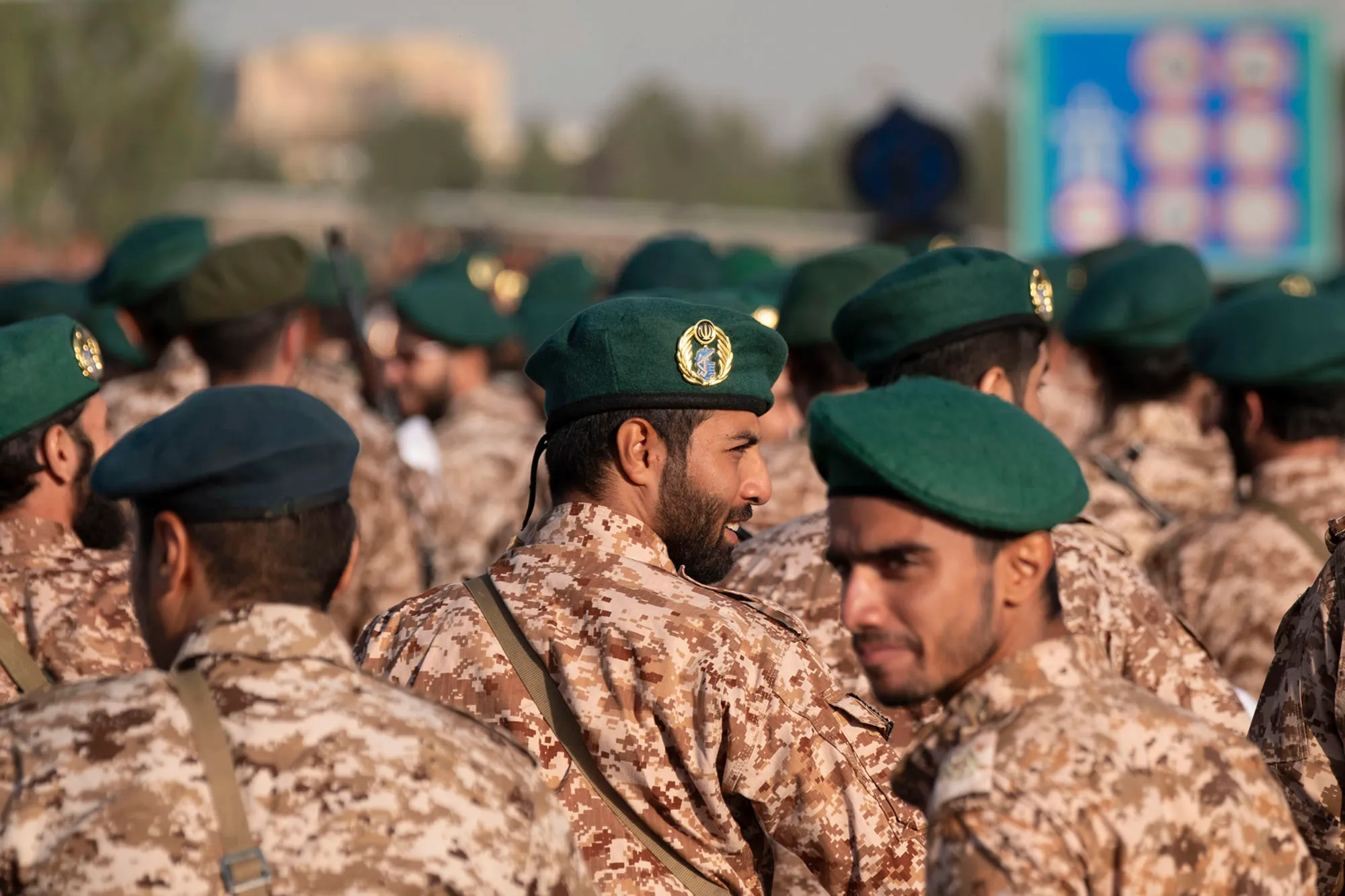
This has led some intelligence analysts to ask more consequential questions: could Venezuela serve not merely as a political ally or logistical hub, but as a forward strategic platform?
From a purely geographical standpoint, northern Venezuela offers something few U.S. adversaries possess—proximity. A launch platform in the Caribbean basin would dramatically compress warning times for the continental United States compared to launches originating in Eurasia or the Middle East.
This becomes even more significant when considering recent Iranian and Russian missile failures:
- June 2025 war: Iran launched missile barrages against Israel following a major escalation; many failed to strike their intended targets.
- November 2025: Russia launched an intercontinental ballistic missile—likely an ICBM—that failed seconds after liftoff at the Yasny launch site in the Orenburg region.
There is no public evidence that Iran, Russia, or China currently possess, deploy, or plan to deploy intercontinental ballistic missiles with nuclear warheads on Venezuelan soil. However, intelligence assessments focus not only on current capabilities, but also on intent, feasibility, and preparation.
Advanced plasma physics, fusion modeling, and high-energy systems research—central to Loureiro’s work—are directly relevant to missile propulsion, reentry vehicle physics, and next-generation weapons design.
In that light, Venezuela’s role becomes more than symbolic. It becomes strategic.
Recent U.S. actions in and around Venezuelan waters have further fueled speculation. The seizure of Venezuelan-linked oil rigs and the bombing or disabling of Venezuelan vessels have been publicly framed as enforcement of sanctions and counter-smuggling operations. But some analysts question whether those explanations are complete.
If U.S. intelligence suspected the covert movement of nuclear-related materials, maritime interdiction would be one of the few viable options to disrupt it. Such materials are not easily detectable, and oil platforms, tankers, and commercial vessels offer plausible cover for concealment and transfer.
Confronting adversaries such as Iran, Russia, and China via proxy warfare—channeled through Venezuelan cartel structures—aligns closely with established U.S. strategic doctrine.
There is no public confirmation that nuclear materials were involved in any of these incidents. But the intensity and selectivity of U.S. actions have raised questions about whether Washington is searching not just for oil revenues, but for something far more dangerous.
While the investigation into Dr. Loureiro’s murder—and whether it is directly linked to Iran or Venezuela—remains ongoing, his death has occurred amid escalating U.S.–Iran hostilities, deepening Russian-Iranian military cooperation, and renewed focus on Venezuela as a strategic pressure point.
If Venezuela is emerging as a permissive environment for adversarial powers to position strategic force closer to U.S. territory, then the questions raised by this case extend far beyond Brooklyn, Massachusetts—and into the core of modern deterrence itself.