Table of Contents
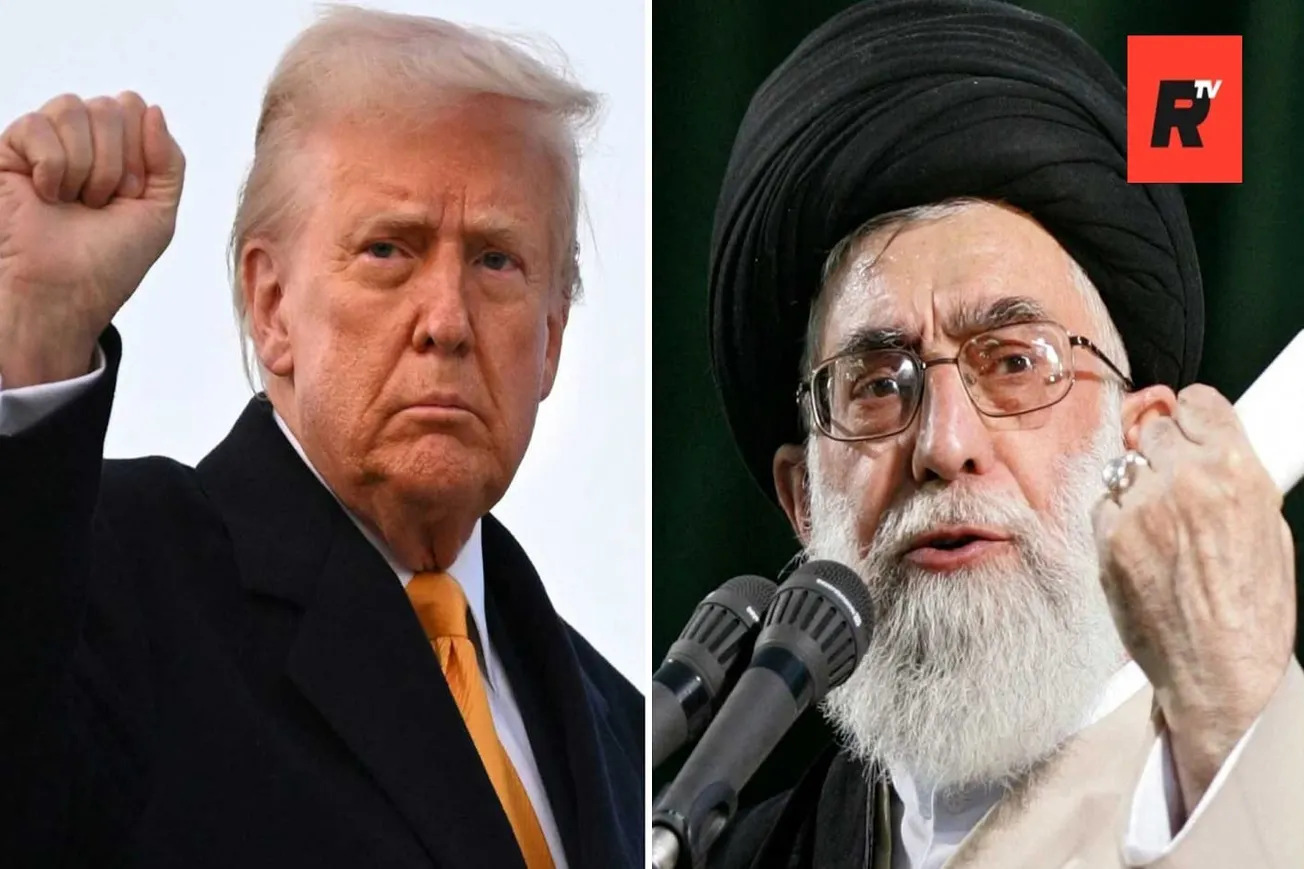
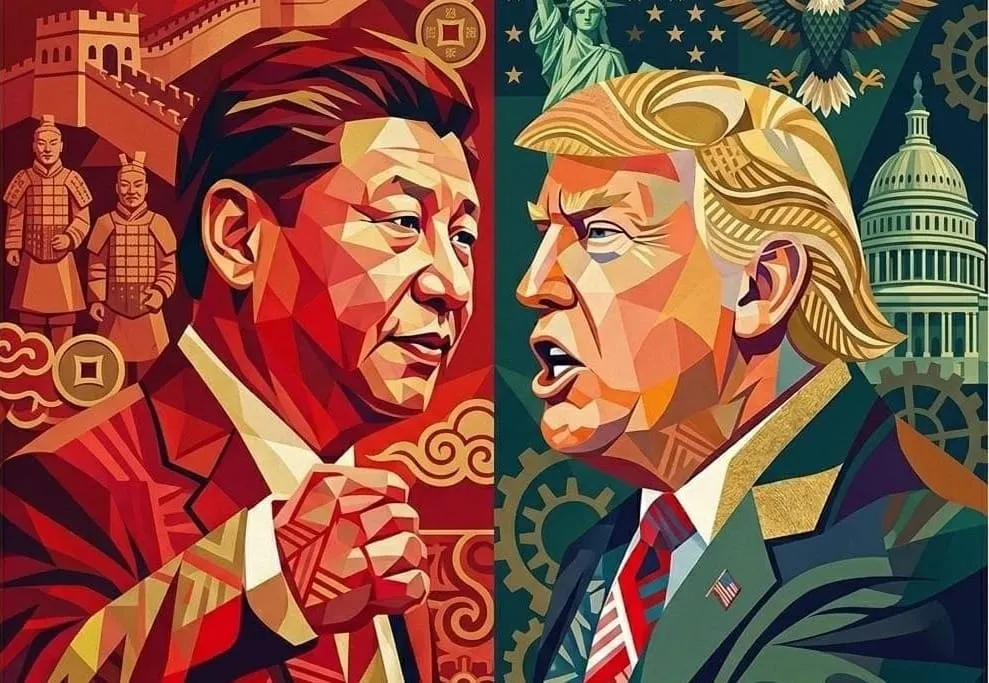
When Air Force One touched down at Beijing Capital International Airport on the evening of May 13, the moment carried a certain weight that was hard to ignore. No sitting American president had set foot on Chinese soil since Donald Trump himself made the journey in November 2017. This time, however, the geopolitical arithmetic had shifted considerably and not entirely in Washington's favor as one might think.
Trump's state visit, which ran from May 13 to 15 at the invitation of President Xi Jinping, marked the first visit by an American president to China in almost nine years, arriving with current heightened bilateral tensions spanning trade, technology, and defense. The timing alone told its own story: it intersected with a precarious U.S.–Iran ceasefire and a dual blockade of the Strait of Hormuz that was driving up energy prices and weighing on global economic growth. Trump was not arriving as a conqueror of markets but as a president seeking stabilization and, in many respects, relief.
A Changed Balance of Power
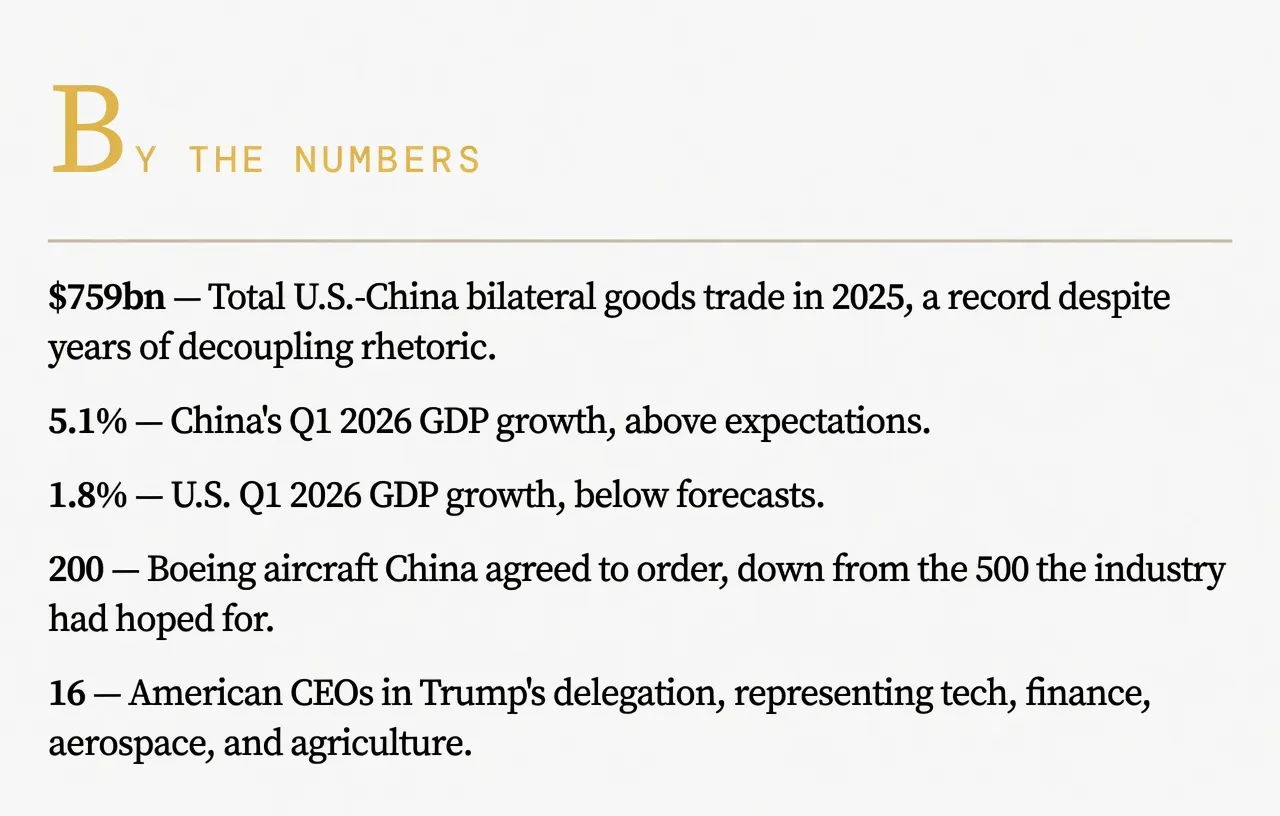
The contrast with the 2017 visit could not have been starker in strategic terms. When Trump won the presidency in 2016, he promised to confront China, rebalance trade and bring back American jobs. On returning to Washington in 2025 for a second term, he launched an even more aggressive tariff war against Beijing that some feared would cripple China's economy. But the world's second-largest economy displayed striking levels of durability. China released its first quarter 2026 GDP growth data shortly before the visit, showing a 5.1% year-on-year expansion, slightly above market expectations, while U.S. first quarter GDP came in at only 1.8%.
“China comes into this meeting far more confident than in 2017, when it feared even a small rise in U.S tariffs. In the last year, Xi Jinping has been able to push back and neutralize much of Trump’s actions,” said Scott Kennedy, senior adviser and trustee chair in Chinese Business and Economics at the Center for Strategic and International Studies. That confidence was visible in the choreography of the summit itself: the Chinese Embassy to the U.S. posted on the eve of Trump's arrival that "four red lines in China–U.S. relations must not be challenged," namely the Taiwan Question, Democracy and Human Rights, Paths and Political Systems, and China's Development Right.
China felt confident enough to stand up to Trump on many key issues, including sanctions, technology controls, critical minerals, and Iran. Xi did not need a deal. Trump, facing a domestic economy growing at less than two percent and midterm elections in November, did.
Four Unresolved Disputes
Trump arrived in Beijing with an agenda that was dense with unresolved disputes: rare earth export controls that had disrupted American manufacturing, AI semiconductor restrictions that both governments were using as industrial weapons, Taiwan arms sales that Beijing wanted withdrawn, and a war with Iran that had closed the Strait of Hormuz and sent global energy prices higher. Each of these dossiers was structurally complex; none was amenable to a simple headline announcement.
On rare earths, the leverage sat firmly with Beijing. China is the dominant global supplier of the critical minerals used in everything from fighter jets to electric vehicles. The rare earth issue remained "acute," and any deal would likely require the U.S. to relax select export chip controls in return; but the political atmosphere in Washington made that difficult, according to analysts at Albright Stonebridge Group.
The Taiwan question produced the summit's most charged moment. Xi warned Trump that the U.S. and China "will have clashes and even conflicts" if the long-standing issue of Taiwan's independence is mishandled. China wanted the U.S. to stop weapons sales to Taiwan but Trump told reporters he made "no commitment either way" and would "make a determination over the next fairly short period." Secretary of State Marco Rubio (notably, a Chinese-sanctioned individual who had never previously set foot in Beijing) subsequently sought to temper alarm by declaring that U.S. policy on Taiwan was unchanged.
Iran proved the summit's most geopolitically consequential undercurrent. Trump told Fox News that Xi Jinping said he would not send any military equipment to Iran and that Xi wanted to help reopen the Strait of Hormuz. Both sides also agreed that the Strait of Hormuz must remain open and free of tolls, according to the U.S. readout. China, as Iran's largest oil customer, possesses considerable influence over Tehran; whether that influence would be exercised in ways visible to Washington remained an open question upon Trump's departure.
“You don’t get the sense that much has been accomplished, but preventing the superpower rivalry from spiraling further out of control may be precisely the point.”
Helmut Brandstatter, Member of the European Parliament, Following the summit
Silicon Valley & The Great Hall
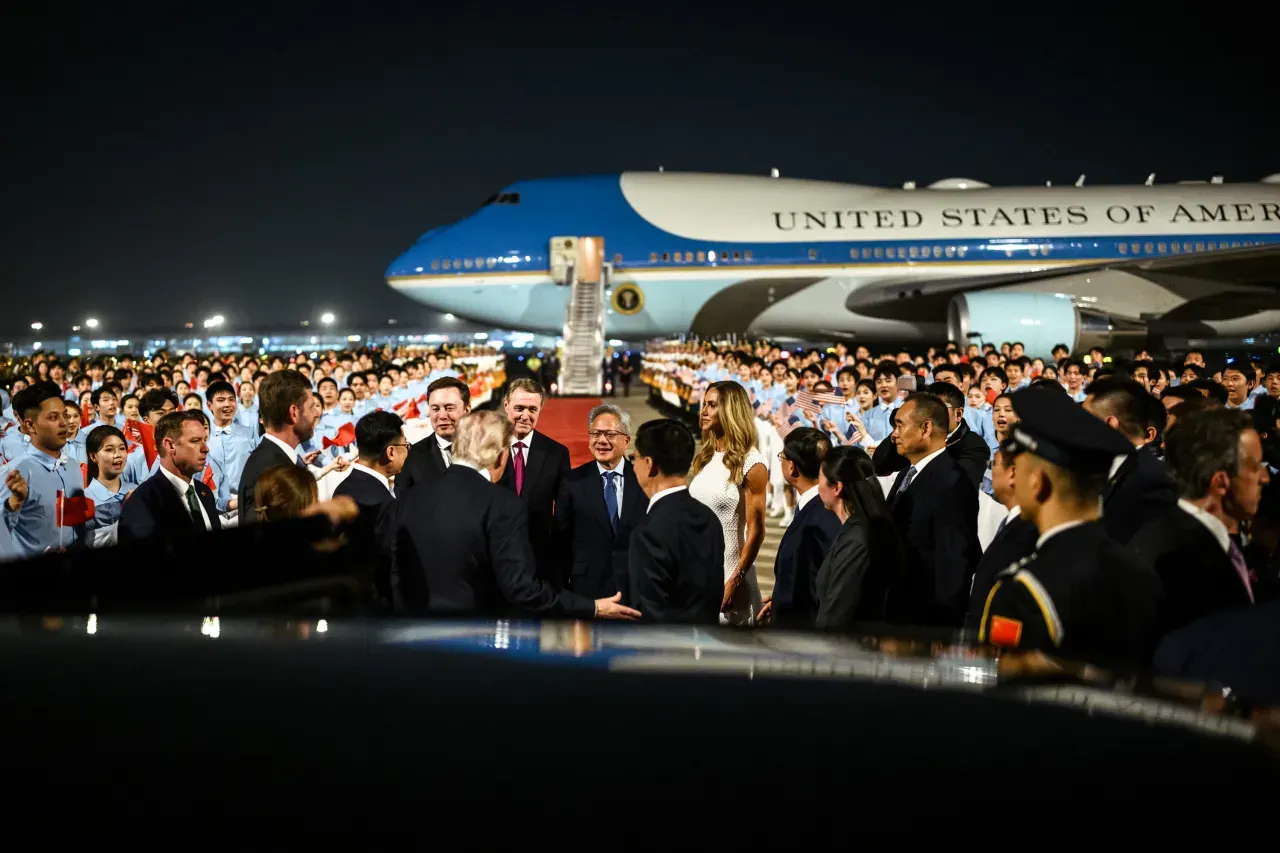
If the geopolitical agenda was heavy with ambiguity, the commercial dimension was unmistakably concrete in its intent. The visit drew global attention for its unprecedented 16-member delegation of top American CEOs, representing core sectors of the U.S. economy including technology, Science, aerospace, and agriculture. The White House made no secret of the signal being sent this was a summit where commercial diplomacy and geopolitical strategy were treated as one and the same enterprise.
Trump called for Xi to "open up" China as he jetted to Beijing alongside leaders of the nation's top tech and Science companies. The world's richest man, Tesla chief and former DOGE leader Elon Musk, travelled aboard Air Force One. The roster reads like a corporate version of a state cabinet:
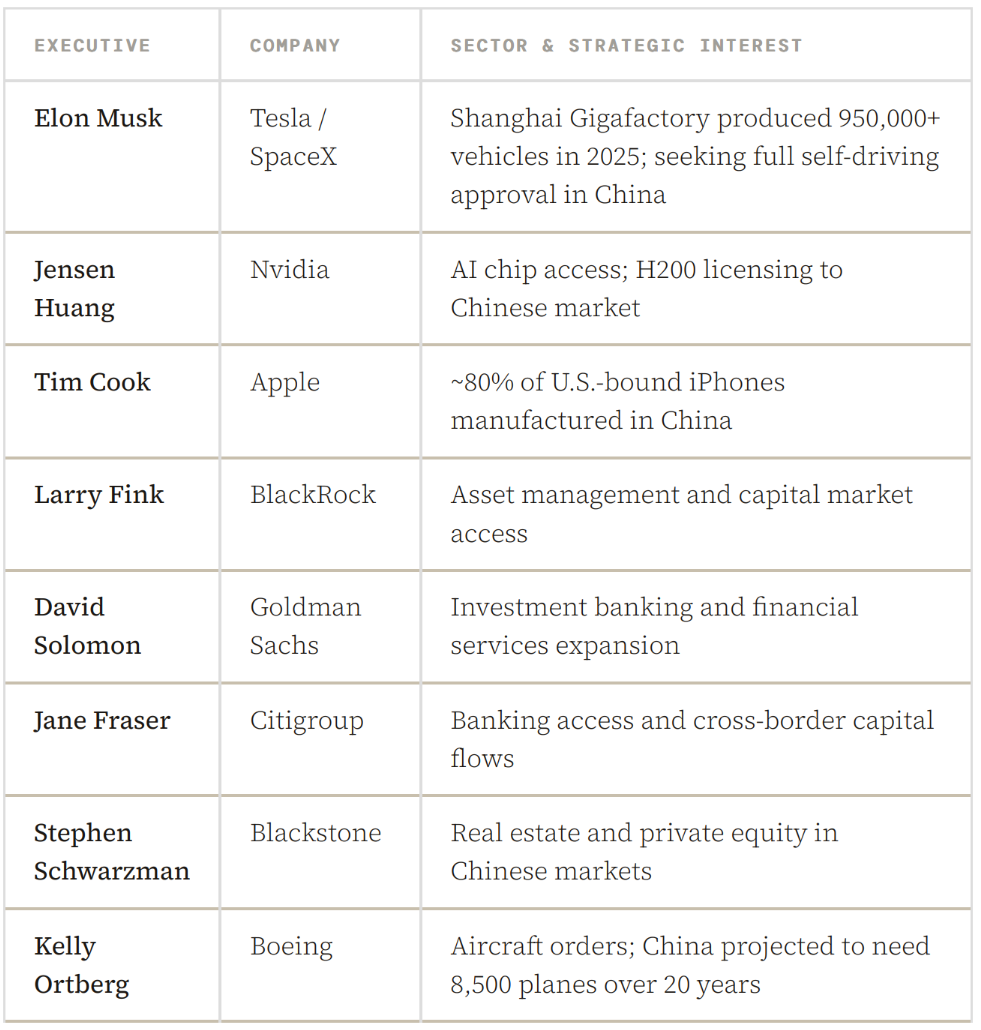
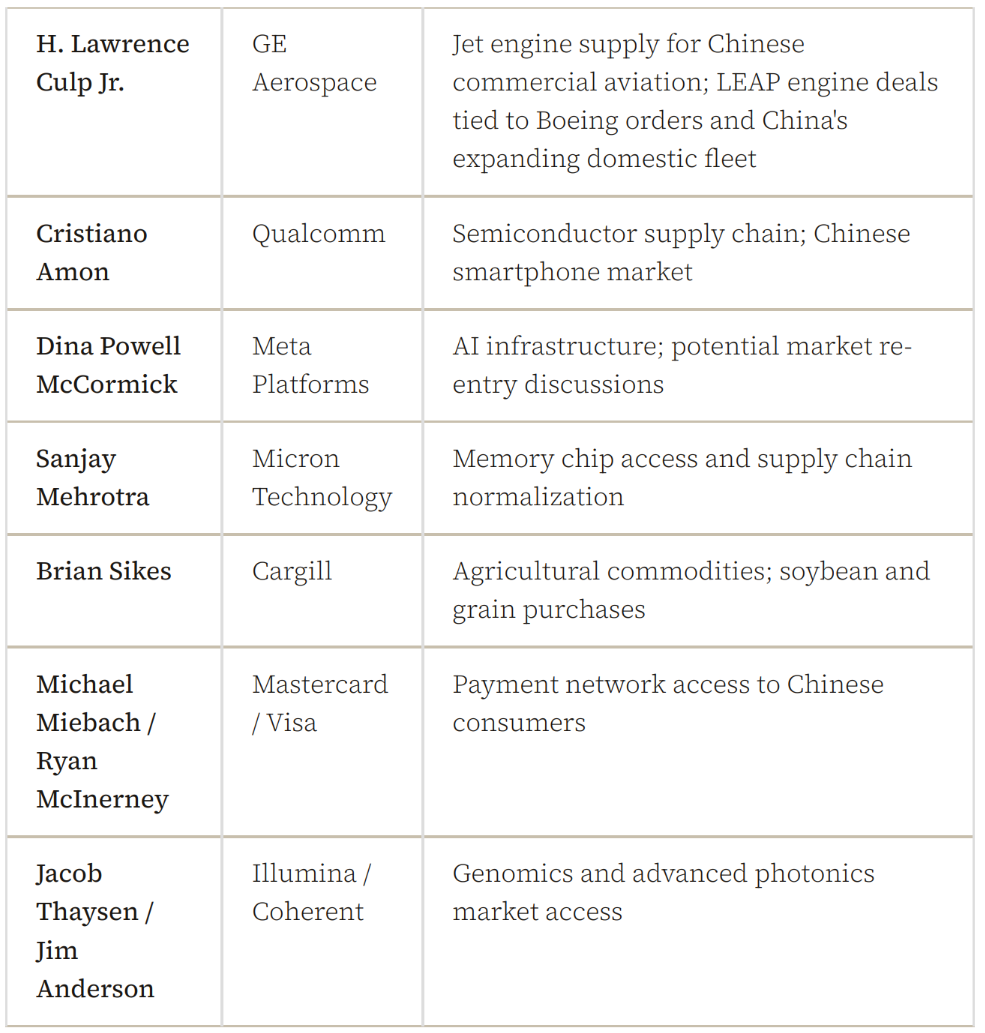
The most dramatic addition came at the last moment. Nvidia CEO Jensen Huang was not on the White House's published list as of Monday. After media coverage flagged his absence, Trump called Huang directly and invited him; Huang flew to Anchorage and boarded Air Force One during a refueling stop. His addition, which was only hours before landing in Beijing, was the clearest single signal of how central AI chip policy had become to the summit's agenda.
What Each Executive Was After
The CEOs were not added as decoration for the summit, but each carried a specific commercial grievance or aspiration into Beijing's ceremonial halls. Tesla's Shanghai factory reported total sales of 292,876 vehicles in the first four months of 2026, up 26.7% year-on-year, making the Gigafactory the group's largest global export hub. With all of that set aside, Musk needed regulatory goodwill on full self-driving software, which is a technology whose Chinese approval remains pending.
Apple sells more than 60 million iPhones in the U.S. each year, with roughly 80% of them made in China. Although Trump had imposed some tariffs on the devices, and pressured Apple to shift its production to the U.S., Cook managed to minimize the fees by shifting production of U.S.-bound iPhones to India. Cook's presence signaled that Apple's interests were best protected mainly through direct diplomatic engagement rather than corporate maneuvering alone.
As for the Financial Sector; BlackRock, Goldman Sachs, Citigroup, and Blackstone’s ultimate prize is access: China's capital markets remain partially closed to foreign operators, and any relaxation of those restrictions could unlock enormous revenue streams. Treasury Secretary Scott Bessent said the U.S. and China had discussed forming a "Board of Trade" and "Board of Investment" to oversee commerce between the two countries which would be a structural framework that, if realized, would institutionalize precisely the kind of market access these executives were seeking.
Boeing's case was perhaps the most symbolically loaded. China's last big Boeing order came during Trump's November 2017 trip, when China agreed to buy 300 planes. Relations soured after that, and Boeing orders from China dried up entirely. Boeing CEO Kelly Ortberg entered Beijing expressing confidence that a deal on aircraft orders would materialize; and it did, though at a scale below industry ambitions.
Inextricably linked to Boeing's fortunes was GE Aerospace CEO H. Lawrence Culp Jr. Every commercial aircraft China orders from Boeing is a potential engine contract for GE Aerospace, whose LEAP engines power the 737 MAX and narrowbody jets central to China's fleet expansion. With China's aviation market projected to require thousands of new aircraft over the coming decades, Culp's seat at the table was less about any single deal and more about securing the long-term engine supply relationships that underpin GE Aerospace's global revenue. This relationship has been quietly strained by the same trade frictions that grounded Boeing orders for nearly a decade.
Agreements & non-agreements
Trump announced that China had agreed to order 200 airplanes from Boeing which would be the first Chinese purchase of American aircraft since the 300-plane order during Trump's 2017 visit, though below the 500 planes that the industry had previously discussed. China also committed to increased purchases of U.S. agricultural products and oil, although concrete volumes were not publicly detailed. Xi Jinping, for his part, used the summit to project openness; as he told the assembled American executives that China's door to business "will only open wider," welcoming U.S. companies to enhance what he called "mutually beneficial cooperation."
On the topic of chips, however, the summit produced no breakthrough. There were no signs of a breakthrough on selling Nvidia's advanced chips to China, despite Jensen Huang's dramatic last-minute addition to the trip. The possibility of a conditional, managed licensing channel for Nvidia sales (potentially with safeguards and limits) remained under discussion but was not formalized. The issue was and is simply too politically explosive domestically for either government to resolve in a 36-hour visit.
On the question of political prisoners, Trump stated he brought up imprisoned Hong Kong media tycoon Jimmy Lai, who was convicted in December 2025 on national security charges and sentenced to 20 years. Trump acknowledged it was "a tougher one" for Xi Jinping and made no explicit call for Lai's release. Human rights advocates noted the conspicuous absence of any firm commitment from the American side.
Pageantry Over Substance
The meetings ended without any substantive agreements that were announced on key issues, although Trump said "a lot of different problems" were settled. China's foreign ministry touted the summit as "historical" and said Xi Jinping will visit the U.S. in the autumn of 2026. The two men walked through the centuries-old Zhongnanhai gardens, lunched on kung pao chicken and dumplings, and, by all public accounts, parted on cordial terms. Whether cordiality translates into “durable policy shifts”, remains the central unresolved question.
The best outcome of the summit could be seen as a tacit extension of the current trade truce with some deliverables on agriculture, aerospace, and investment that serves both sides. It buys China time to consolidate technological autonomy and further sharpen its economic security controls, while at the same time giving the United States a narrow window to build some resilience into its own industrial base. But as analysts at the Council on Foreign Relations noted bluntly, control over critical materials is not just markets and technology but it defines power in the emerging era of economic statecraft, and on that front, Beijing arrives at any table with a decisive advantage.
The pageantry in Beijing was genuine. The state banquet, the Temple of Heaven, the military honors; all were executed with characteristic Chinese precision. But beneath the ceremony, the structural asymmetries of 2026 were unmistakable. Trump came to Beijing seeking deals, stabilization, and a headline before November's midterms while Xi Jinping came to his own capital with a clear strategic position, a growing economy, and the patience of a leader who believes time is on his side. The visit produced neither a grand bargain nor a rupture, but it seemed to only bring the managed continuation of the world's most consequential, and most complicated, bilateral relationship.